Government Introduces Comprehensive Nuclear Energy Reform Bill in Parliament

  • | Tuesday | 16th December, 2025

BY-Alok Verma

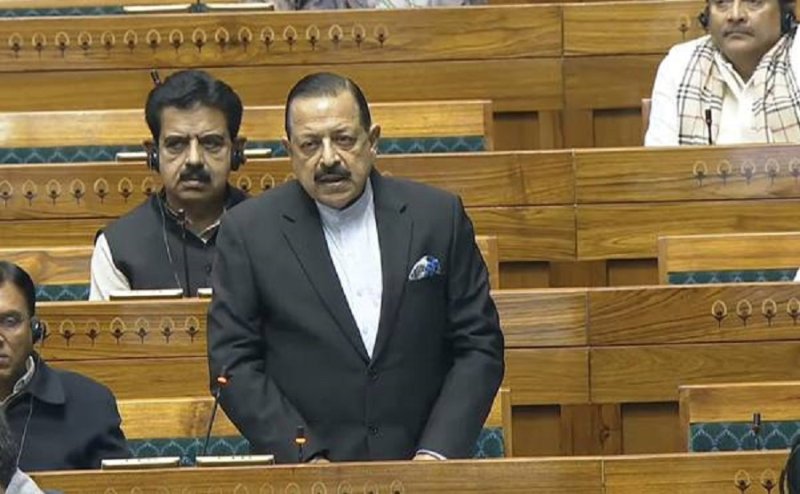
The government on Monday introduced the Sustainable Harnessing and Advancement of Nuclear Energy for Transforming India Bill, 2025 in Parliament, signalling a major overhaul of the legal framework governing India’s nuclear energy sector. The Bill was tabled by Minister of State for Science and Technology Dr. Jitendra Singh.

The proposed legislation seeks to repeal two existing laws—the Atomic Energy Act, 1962 and the Civil Liability for Nuclear Damage Act, 2010—and replace them with a single, consolidated statute aligned with India’s current and future energy requirements. The move is aimed at modernising nuclear governance while supporting the country’s long-term clean energy ambitions.

According to the Statement of Objects and Reasons, decades of sustained research and development have enabled India to achieve self-reliance across the nuclear fuel cycle and to operate its nuclear power programme in a responsible manner. Building on this experience, the government believes there is scope to significantly expand nuclear capacity to ensure clean, reliable, round-the-clock power, particularly for emerging demands such as data centres and future-ready technologies.

The Bill is closely linked to India’s climate and energy transition goals. It outlines a roadmap towards net-zero emissions by 2070 and sets a target of achieving 100 gigawatts of nuclear power capacity by 2047. To achieve these objectives, the legislation proposes fuller utilisation of indigenous nuclear resources and enables participation from both public and private sectors, while also positioning India as a contributor to the global nuclear energy ecosystem.

At an operational level, the Bill introduces provisions for licensing and safety authorisation for entities involved in the production or use of nuclear energy, along with defined grounds for suspension or cancellation. It also brings the use of nuclear and radiation technologies in healthcare, agriculture, industry and research under a regulatory framework, while exempting research, development and innovation activities from licensing requirements.

The proposed law includes a revised civil liability framework for nuclear damage and grants statutory status to the Atomic Energy Regulatory Board. It strengthens mechanisms related to safety, security, safeguards, quality assurance and emergency preparedness. The Bill also provides for new institutional structures, including an Atomic Energy Redressal Advisory Council, appointment of Claims Commissioners, and the establishment of a Nuclear Damage Claims Commission in cases of severe nuclear incidents. The Appellate Tribunal for Electricity is designated as the appellate authority.

With the introduction of the Bill, the government has indicated its intent to update nuclear legislation in line with technological advances, energy transition goals and international commitments, while seeking to balance expansion of nuclear power with safety, accountability and public interest.


If You Like This Story, Support NYOOOZ

NYOOOZ SUPPORTER

NYOOOZ FRIEND

Your support to NYOOOZ will help us to continue create and publish news for and from smaller cities, which also need equal voice as much as citizens living in bigger cities have through mainstream media organizations.


Stay updated with all the Delhi Latest News headlines here. For more exclusive & live news updates from all around India, stay connected with NYOOOZ.

Related Articles